A kitchenware sample is approved when four things match the specification: dimensions, fit, finish and documentation. Too many approvals are made on looks alone – the sample sits on a desk, looks right, and the order proceeds until the first batch arrives with a lid that does not seal or a handle that is 5mm short. Measure the sample, test the fit, inspect the finish and keep the paperwork; that is the whole job.
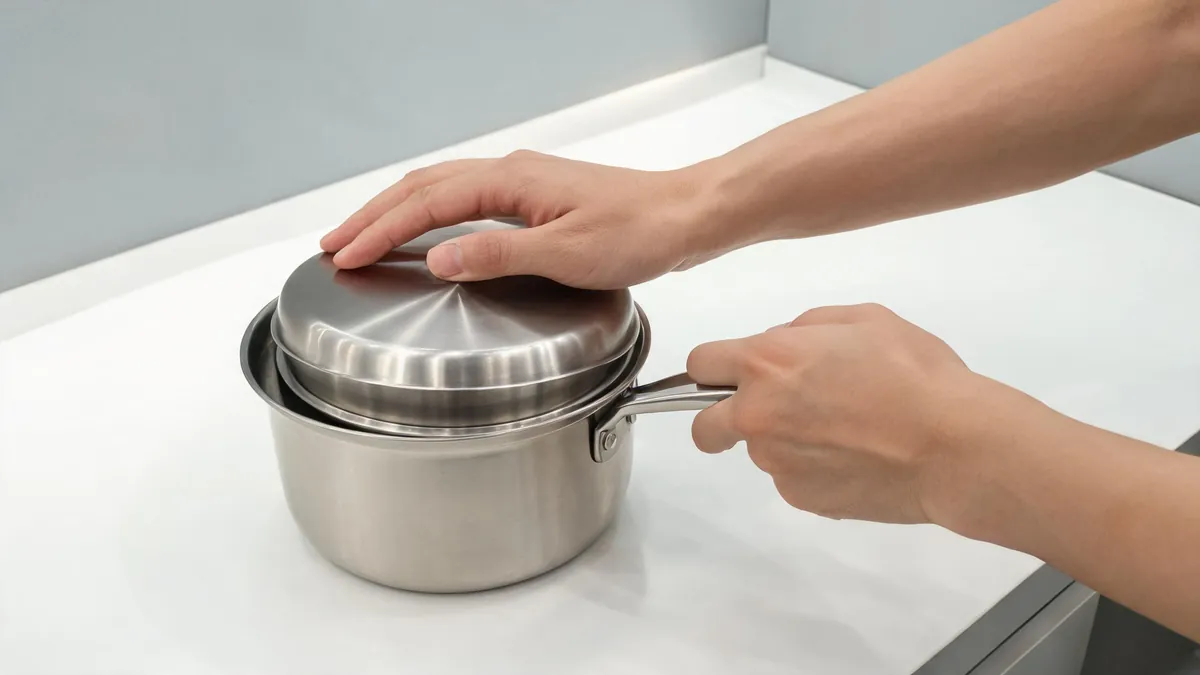
- Overall dimensions – diameter, height, depth and handle length against the spec sheet.
- Capacity – fill the sample with water to confirm the stated capacity; a frying pan that claims 28cm and measures 27.5cm is a spec failure.
- Thickness – check gauge where it matters: pan body, pot base, lid.
- Weight – compare against the agreed weight; significant differences change handling and freight.
Use a ruler, calipers and a kitchen scale. Record the numbers on the sample report, because the next sample or the bulk run is compared against the approved record, not against memory.
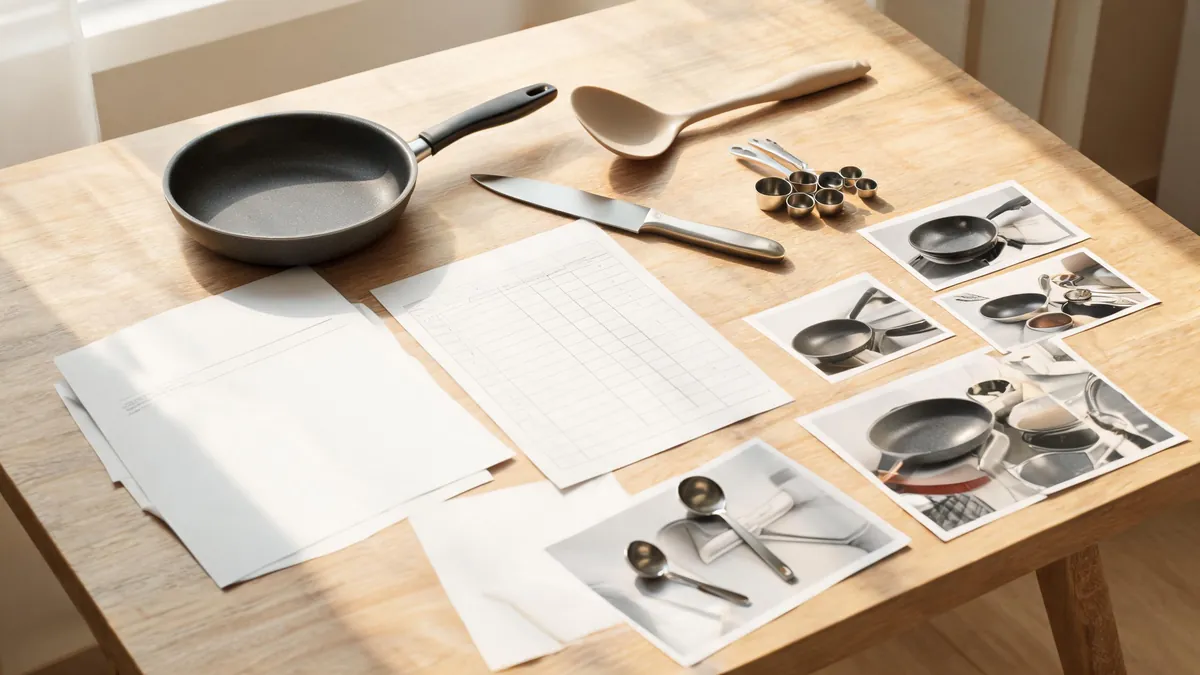
- Lid fit – the lid should sit level and seal consistently when rotated.
- Handle attachment – check rivets or welds are tight, and the handle does not move or flex.
- Stacking – for nested or stackable sets, confirm the pieces stack without sticking or scratching.
- Knob and grip – check the knob is secure and the grip is comfortable in use.
Finish: coating, edges and print
- Coating – even coverage, no bubbles, no thin spots at edges and curves.
- Edges and rims – smooth, no burrs or sharp spots; rolled rims should be continuous.
- Print and logo – placement, color and durability of any logo or print, compared against the approved artwork.
- Interior surface – for non-stick, check the interior coating consistency across the whole surface.
Documentation: what should come with the sample
- Sample report from the factory – dimensions, materials, weight and test results if agreed.
- Material certificate – confirming the grade or material for the sample, matching the order spec.
- Test reports – food-contact or coating tests if required for your market.
- Sample photos – front, back, side and a close-up of the logo, with the sample date.
The documentation matters as much as the sample itself, because it is what you compare against later. A sample without a report is a piece of hardware; with the report it is a specification checkpoint.
The approval record
| Check | Record | Approve when |
|---|---|---|
| Dimensions | Measured values on the report | Match spec within agreed tolerance |
| Fit | Lid, handle, stacking notes | All functional checks pass |
| Finish | Coating, edges, print photos | Consistent, matches artwork |
| Documentation | Reports attached | Reports match the sample |
Send the approval record back to the factory in writing, with the date and any remaining changes. A written approval with photos is the reference for the bulk run – and the evidence if the bulk run differs.
Testing the sample in use
- Cook with it – heat a pan and check for hotspots, warping and handle temperature during use.
- Wash it – run the sample through a normal wash cycle to check the finish survives cleaning.
- Stack and store – confirm the sample stacks and stores as intended in the warehouse and at home.
- Check the box – test the carton with the sample inside to confirm the pack is right for transit.
A sample that passes measurement and inspection can still fail in daily use. A short use test – cooking, washing, stacking – is the difference between approving a photo subject and approving a product.
Keeping the approval file
Keep the approval record in one place: the sample photos, the measured values, the factory’s sample report and your written approval. The file is what you reference when the bulk run arrives, and what you show the factory if the run differs. A complete approval file also survives staff changes – if the person who approved the sample leaves, the record stays.
FAQ
How many kitchenware samples should I request?
Usually one finished sample per item before bulk production, and a second round only if the first fails. For large orders, a pre-production sample from the actual run settings is worth the extra cost.
Should I approve a sample that is close but not exact?
Only with a written list of the differences and a deadline to fix them. Approving ‘close enough’ informally is how bulk runs drift from the spec.
What if the bulk run does not match the approved sample?
Compare against the approval record – measured values and photos. Document the differences, and use the record as the basis for a correction or claim.
Do I need material certificates with the sample?
Yes, if the material is specified in the order. A certificate with the sample confirms the material before you commit to bulk, rather than discovering a substitution later.
Need a sample approval checklist applied to your kitchenware order?
Ask KitchenWareSourcingRelated reading: kitchenware sample approval measurements and finish · frying pan sample evaluation