A kitchenware sample approval should include tests, not just looks. Put the pan on a stove and check heat distribution, hold the handle and measure its temperature, scratch the coating and test the lid fit. Photos are useful, but the approval decision should be based on what the sample does in use – because that is what your customers will experience.
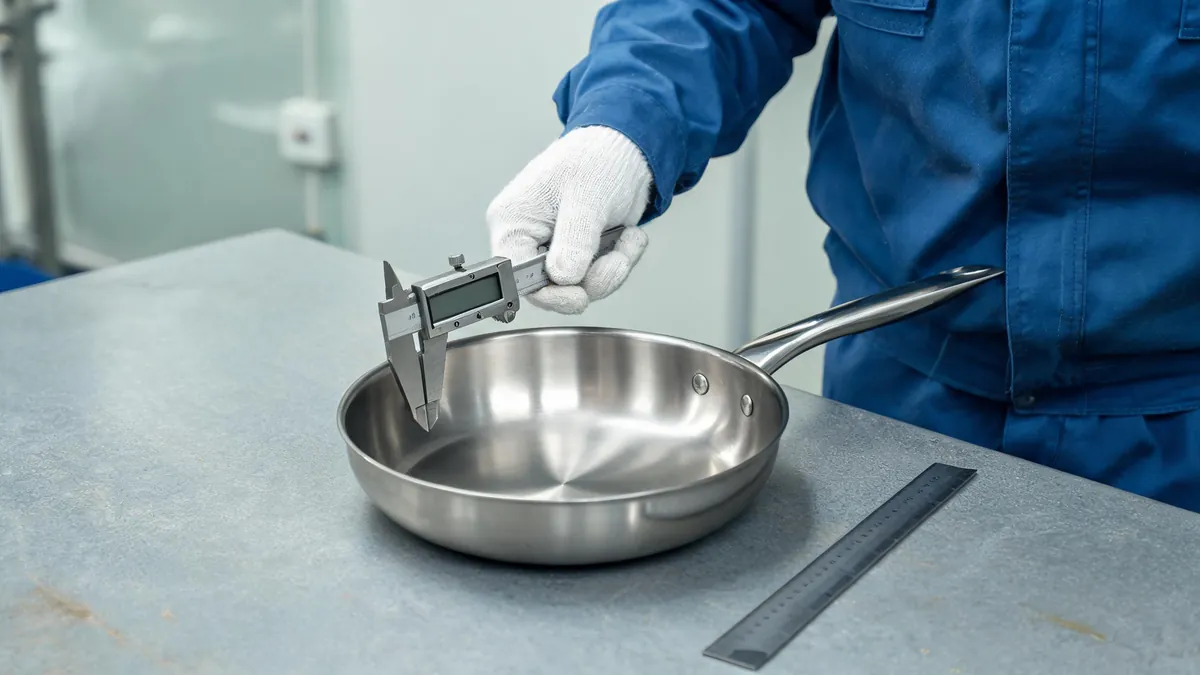
The approved sample is the reference for bulk production: the factory matches dimensions, materials, finish and function to the kept sample. If you approve on appearance alone, you approve everything you did not test. A short test protocol – what to cook, what to measure, what to photograph – makes the approval specific and protects both sides.
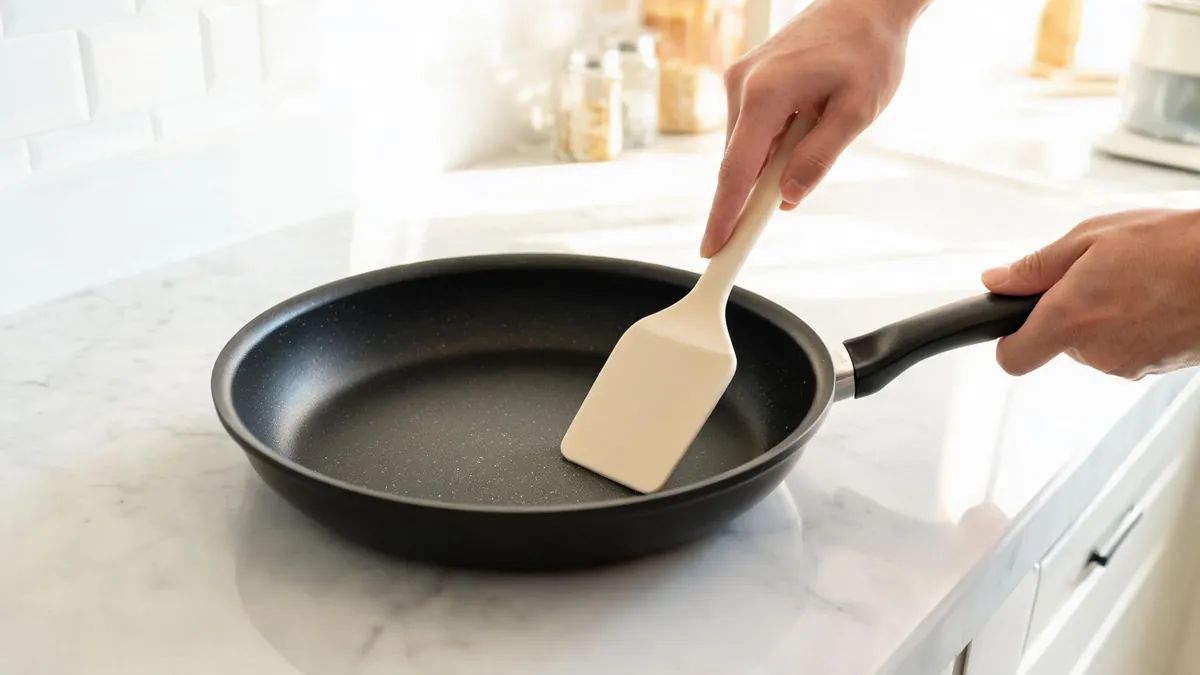
- Heat distribution: heat a dry pan on medium and check how evenly the base warms – or boil water and watch where bubbles form first.
- Warping: after heating and cooling, place the pan on a flat surface and check the base for rocking.
- Sticking test: cook an egg or a similar test food in the coated pan following the usage instructions.
- Oven test (if claimed oven-safe): confirm the handle and body tolerate the stated temperature.
Handle temperature and ergonomics
An oven-safe pan with a handle that gets hot defeats its own design. Measure handle temperature after a few minutes on the stove, and check that the grip is comfortable and stable. Also test the handle rivets or welds – a wobbly handle on a sample rarely improves in bulk.
Coating and finish durability
- Scratch test on a non-stick or ceramic surface using the utensils the user will actually use.
- Check coating edges: flaking at the rim or around rivets is a common early failure.
- For stainless steel, check for discoloration after heating and cleaning.
- Photograph the surface before and after the tests so the record is visual.
Measurements and packaging at sample stage
| Check | What to record | Acceptance |
|---|---|---|
| Dimensions | Diameter, height, base thickness in mm | Matches spec within agreed tolerance |
| Weight | Gross weight per piece | Consistent with the quote assumptions |
| Capacity | Fill volume in liters | Matches the printed capacity |
| Carton fit | Sample fits the planned carton | No loose movement, no crush risk |
The approval email that prevents disputes
Write the approval as a short decision with conditions: what is approved, what changed, and what the factory must confirm. Example: “Approved with two changes – handle color to match panel A and base thickness confirmed at 3 mm. Please confirm the production start date and that bulk matches the kept sample.” A clear email beats a thumbs-up photo when a dispute arrives.
FAQ
How many kitchenware samples should I test before bulk?
For a standard product, one to three samples are enough to test consistency; for a new product or new factory, test at least two to three and compare them. If the samples differ from each other, that is a signal about production control.
What should I do if the sample fails a test?
Report the failure with the test details and ask for a corrected sample before approving. Never approve a failing sample with a verbal promise – the approval should match what you want bulk to be.
Do I need to test every coating claim on the sample?
Test the claims that matter to your market: non-stick performance, oven safety, dishwasher safety. A few practical tests on the sample cost nothing and catch the claims that a brochure will not honor.
How do I keep the approved sample as a reference?
Label it, photograph it from all sides, and store it somewhere dry. Tell the factory in writing that bulk production must match the kept sample, and keep it until the order passes inspection or arrives.
Want a sample test protocol written for your product line?
Request a kitchenware quoteRelated reading: kitchenware sample approval checks · frying pan sample evaluation