Value and variety retail looks like an easy channel for kitchenware importers, and that is exactly why most first programs fail. The buyer at a discount store is not looking for the same product as the buyer at a department store; she is looking for a product that hits a fixed retail price, survives rough handling in a dump bin, and still leaves the store a margin after freight and duty. If you price a program from your catalog instead of from the shelf price backwards, every line you ship will be either too expensive to sell or too cheap to sustain. The fix is to design the range around three numbers before you ask a supplier for a quote: the price band the store actually sells at, the case economics that make the freight work, and the compliance file the retailer will demand before the first purchase order.
Why Value Retail Is a Different Channel, Not a Cheaper Version of the Same One
Most importers treat discount and variety retail as “normal retail with lower prices.” That assumption produces the wrong assortment, the wrong packaging and the wrong supplier conversation. A supermarket buyer and a value-store buyer may both sell a frying pan, but the supermarket sells a branded or mid-tier line with repeat purchase logic, while the value store sells a traffic item at an impulse price point where the store’s entire margin depends on buying discipline. The two channels need different products, different case packs and different quality tolerances.
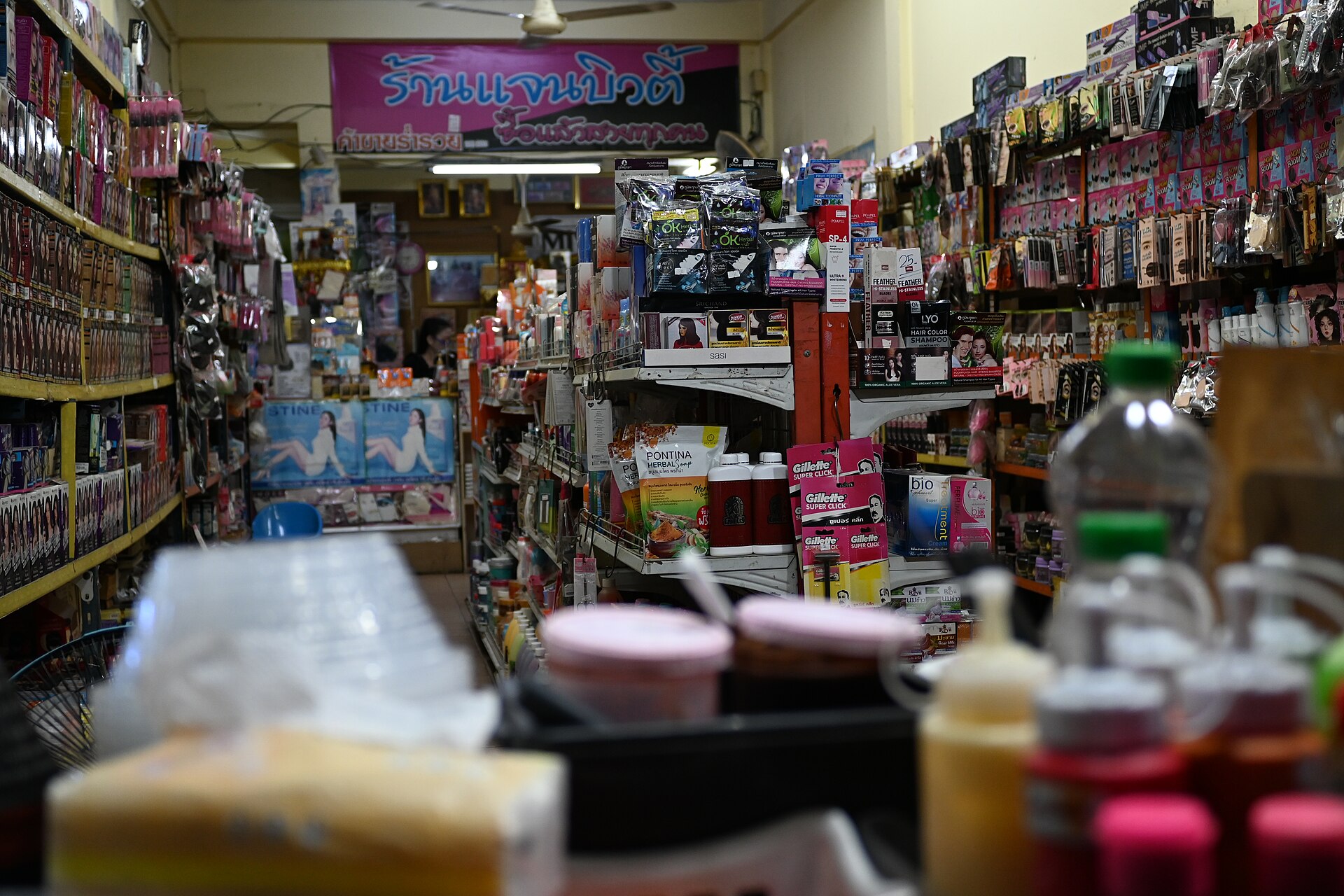
Value retail in Europe, North America and Central Asia now includes several formats that buy kitchenware in volume: single-price stores, where nearly everything sits at one headline price; pound, euro and dollar-store chains that run a range of low price points; variety or “everything” stores that mix household goods with food, stationery and seasonal items; and discount supermarkets that run non-food promotions on a rotating calendar. Each format has its own ordering rhythm. Single-price stores plan around a fixed ticket and need suppliers who can engineer cost to that ticket. Multi-price chains manage a ladder of bands and shift volume between them by season. Discount supermarkets buy non-food in promotional windows, which means kitchenware orders arrive in spikes that must match a promotion calendar, not a continuous replenishment plan.
The practical consequence is that the channel defines the product. A cookware line that sells at a supermarket’s everyday price may be too expensive for a value program at the same physical size; the value buyer will ask for a lighter gauge, a simpler handle or a smaller set to hit the band. That is not a downgrade in ethics or quality — it is a different specification written for a different use life. The retailer knows its customers replace these items often, and it prices them accordingly. The importer’s job is to understand the specification the band requires and to verify that the factory can build it without cutting the corners that create returns: a coating that fails in week two, a handle that loosens, a barcode that does not scan.
Supermarket chain programs run on similar documentation but different economics; if you already serve that channel, the value-retail version of the same product family is usually a separate SKU range with a separate cost target, not the same range with a discount.
Price Bands: Where Kitchenware Sits and How to Engineer to a Ticket
Every value retailer works to a band architecture — the set of retail prices its customers expect. The bands are the channel’s constitution. Kitchenware usually occupies the middle of the architecture: below electronics and large cookware sets, above confectionery and small consumables. A typical value program might sell small gadgets and utensils at the lowest band, single bakeware items and mixing bowls one band up, frying pans and small cookware sets at the middle bands, and promotional cookware sets at the top of the range. The exact bands differ by chain and by country, so the first question to a buyer is always “what is the target retail price for this line?”, not “what do you pay for a pan?”
Engineering to a ticket is arithmetic. Starting from the retail band, you subtract the retailer’s margin, then landed cost, then freight and duty share, and what remains is the factory price the product must fit. Importers who work this way discover that the factory price is the output of the calculation, not the input. If the calculation leaves no room for a decent base gauge or coating, the product specification must change — a smaller set, a lighter lid, a plainer finish — until the arithmetic works at a quality level the store can sell without generating returns. When a supplier tells you a price “cannot be done,” what it usually means is that the current specification cannot be done at that price; a specification written for the band usually can be.
One warning: single-price programs tempt buyers to ask every factory for “the cheapest possible” version of the same product. Cheapest-first sourcing produces exactly what the phrase promises — the cheapest version, which is often the version with the highest return rate. The professional approach is target-cost sourcing: give the factory a complete specification for a product designed for the band, then compare factories on how close they land to the target. The comparison belongs on capability and process, not on who can strip the most cost out of a spec.
| Band position | Typical kitchenware content | Buying implication for the importer |
|---|---|---|
| Lowest entry band | Utensils, peelers, small gadgets, single silicone items | High volume, low ticket; case size and cube decide the freight cost per unit |
| Middle bands | Mixing bowls, bakeware items, frying pans, kitchen tools | Volume plus range logic; the store expects several options at the same band |
| Upper bands | Cookware sets, knife sets, multi-piece bakeware | Promotional and seasonal; sold in windows, ordered months ahead |
| Seasonal add-ons | Holiday bakeware, picnic tools, grill accessories | Tight sell-through windows; late stock becomes next year’s problem |
The price bands also set the packaging budget. A product at a low band cannot carry a heavy retail box; the packaging must protect the item in transit and still sit inside the cost target. That is a packaging engineering conversation with the supplier, not an afterthought. Retail-ready packaging that looks cheap enough for the shelf but protects well enough to avoid damage claims is one of the quiet differentiators between value-retail programs that last and programs that die after the first container.
Quick answer: what price band should a new kitchenware importer target first?
Start with the middle bands, not the lowest. Entry-band kitchenware is dominated by suppliers who run extreme volumes at extreme cost discipline, and a new importer has no advantage there. The middle bands still turn volume, tolerate a better product, and leave room to build a program with several families. Once the middle band works — same supplier, same case logic — extending upward into promotional sets is easier than fighting downward on cost.
Case Economics: The Math That Decides Whether the Container Works
Value retail is bought in case packs and shipped in master cartons, but the buyer at the store thinks in units at a price. The importer lives in the middle of those two views, and the case economics — units per case, weight, cube and cost per unit — decide whether a container of kitchenware at a $1.25 ticket is a business or a charity. For a low-ticket item, the factory price is a small part of the landed cost per unit; freight, duty and handling often matter as much. That is why two importers can buy the same product from the same factory and one makes money while the other does not: the profitable one designed the case to fit the freight.
Case architecture for value retail has to balance four variables. Units per case must match what the retailer’s warehouses and stores can handle — a case of 144 heavy mugs is a labor problem. Inner packing must protect the product and allow the store to break cases without damage — loose-fill packing that shifts in transit creates damage claims that eat the margin of several good cases. Carton cube must use the container efficiently, because cube wasted on air is freight paid for nothing. And the master carton must survive stacking — low-cost kitchenware is often stacked high in consolidation, and crushed cartons are the most common invisible loss in mixed containers. The container packing specs guide on this site walks through carton and palletizing details that apply directly to value-retail volumes.
| Case variable | What to confirm with the supplier | Why it matters at value retail |
|---|---|---|
| Units per case | Standard case count and inner pack breakdown | Matches the retailer’s shelf and backroom labor; odd counts create breakage |
| Case weight | Gross and net weight per master carton | Weight drives freight and warehouse handling cost per unit |
| Carton cube | Dimensions and cartons per pallet | Cube waste is paid freight; efficient cartons lower landed cost per unit |
| Print and barcode | Case barcode, retail unit barcode, artwork approval record | Scan failures at the DC stop the whole delivery |
| Case pack marking | Shipping marks, country of origin, carton labels | Clearance and DC receiving need readable marks on every carton |
For single-price programs, one additional number matters: the per-unit landed cost must clear the band with the retailer’s margin intact, and the case economics are where that clearance is won or lost. A product that is one cent too expensive at the factory can sometimes be saved by a smarter carton that ships more units per container. That is why experienced importers treat the case design session with the supplier as part of pricing, not as a logistics detail.
Assortment Logic: Hero Lines, Fill-Ins and Seasonal Windows
Value-retail assortments are built in layers, like every other retail range, but the layers have sharper names. A hero line is the item the store advertises or features because it pulls customers in — often a recognizable kitchen basic at a sharp price. Fill-in lines are the everyday items that give the shelf range and give shoppers a reason to add to the basket. Seasonal lines are the promotional items that rotate through the calendar — holiday bakeware, summer picnic tools, back-to-school lunch items. The importer who understands which layer each SKU belongs to buys differently for each: heroes need dependable supply and case economics; fill-ins need range logic and steady quality; seasonal lines need tight timing and disciplined quantity.
The mistake that kills new value-retail kitchenware programs is treating the assortment as a list of individually cheap products. A shelf of unrelated cheap items has no logic and no repeat purchase. The working assortment has a story per family: cookware that moves from a single pan up to a small set, bakeware that covers the baking basics at the band, tableware that gives the store color and style options, gadgets that generate impulse add-ons. The kitchenware products program is built as a mixed assortment across these families; a value-retail buyer can use the same structure as a starting point and then filter by band and by the retailer’s sell-through data.
Variety retail also differs from other channels in one important way: it reorders winners and kills losers faster than most retail. A line that does not sell in the first promotional window is often gone for good, and the space goes to another test. That means the importer’s SKU list must be treated as a living range, with planned review points and enough flexibility in the supplier relationship to add a winner quickly and phase out a loser without a fight. Suppliers that require large minimums on every new SKU make this rhythm painful; suppliers that run a mixed program with flexible minimums per SKU fit the channel better.
Compliance and Documentation: What Value Retailers Demand Before the PO
Value retailers are often stricter on documentation than premium chains, for a simple reason: their volumes are large, their prices are low, and their exposure if a product fails a market test is huge. A recall in a discount chain touches thousands of stores. So the compliance conversation happens before the price conversation, and an importer who arrives with a thin documentation file will not get the program no matter how good the price is.
The documentation list for kitchenware into the EU, UK and US markets typically includes food-contact compliance statements, material test reports for the specific metals, coatings and plastics used, and product-level declarations that match the finished item — not a generic “our factory is compliant” letter. Buyers may also ask for documentation on the responsible person or importer of record requirements that apply in their market, barcode verification records, and, for promotional and seasonal items, print and packaging compliance checks. The exact certificates depend on the product and the destination market; the discipline is to ask the buyer which documents their compliance team requires before you commit to a factory, and to put the document list in the RFQ so every supplier quotes against the same compliance burden.
Two documents deserve special attention in value-retail programs. The first is the material test report that matches the actual production batch — a report for a different gauge or a different coating vendor is not evidence for your product. The second is the artwork and print approval record for retail packaging, because packaging mistakes in a value program are expensive: a barcode that fails, a weight statement that is wrong, or a print defect on a promotional box can stop an entire delivery at the DC. The retail-ready versus bulk packaging guide covers the choices and the approval points in detail.
On food-contact and material claims, use conservative language with your own customers and in your own documentation. If you are not certain a coating or material meets a specific standard for a specific market, say “confirm with the supplier” and get the test report in writing. A claim you cannot back with a document is a liability, not a selling point.
Packaging That Survives the Channel
Discount-store logistics are not gentle. Product moves from master carton to case to shelf in high volume, often through conveyor systems and dump bins, and the packaging must survive that journey without looking tired. Retail-ready packaging for value retail needs four properties: it protects the item in a mixed carton, it presents the item clearly on a shelf or in a bin, it carries a scannable barcode and legible price-zone labeling, and it does not add so much cost that it breaks the band. Those four properties pull against each other, which is why packaging for this channel is a specification exercise, not a catalog choice.
In practice, the packaging decisions that matter most are the inner protection (how the item sits inside the retail pack and inside the case), the display format (hanging card, box, polybag with header, or loose in a bin), and the pack print quality. Blister cards and boxes need approved artwork and color consistency across production runs; a color shift that looks minor in the factory can look like a different product on the shelf. For bin items, the packaging has to protect without dominating — shoppers at value retail expect to touch the product, and over-packaging reads as higher cost.
Quality Tolerances for the Band: What “Good Enough” Means in Writing
Quality in value retail is not “anything goes.” It is a tolerance conversation with the supplier, written into the order. The product must be consistently good enough that the return rate stays inside the retailer’s allowance, at a cost the band can support. That usually means agreeing on acceptance sampling with clear limits — many programs run on standard AQL sampling for functional and appearance defects, with tighter limits on safety-critical and food-contact issues — and agreeing on the borderline cases in advance: how much coating pitting is acceptable on a promotional pan, how visible a minor print scratch may be on a retail box, what happens to units that fail the agreed level.
The cheapest place to set quality expectations is in the specification and the pre-production sample approval, not in the final inspection report. Value-retail programs should treat the sample approval as a contract: measurements, finish, print, packaging and barcode all approved against written samples before bulk production starts. The sample approval checklist on this site covers the dimensional and finish checks that matter for high-volume programs.
Landing the First Program: RFQ Data, Sample Round and Reorder Rhythm
When the band, the case economics, the assortment and the compliance file are settled, the sourcing itself becomes a professional process rather than a price hunt. Send every candidate supplier the same RFQ data: the target retail band, the required case pack, the destination market and its documentation needs, the quality tolerance you expect, and the packaging specification. The suppliers that respond with questions and cost breakdowns are the ones who understand the channel; the suppliers that respond with a single low number and no questions are quoting a catalog product that will not survive the program.
The sample round is the moment of truth. Value-retail samples should be tested the way the store will treat them: packed, shipped, dropped, scanned and, for food-contact items, checked against the documentation file. A sample that arrives in a battered carton with a missing barcode has already failed the channel test, whatever the product looks like on a counter.
After the first container, the program lives on reorder rhythm. Set review points with the retailer for each family, watch which lines turn and which sit, and build the reorder conversation around data. If the program includes drinkware or glassware — common in variety retail where kitchenware and drinkware share a shelf — a specialist glassware supplier such as Frozl can run that side of the range with its own packaging and compliance discipline, which keeps the kitchenware factory focused on the cookware, bakeware and tableware lines where its process matters most.
Frequently Asked Questions
What price bands should a kitchenware importer target for value retail?
Start with the middle bands, where volume is real but the product can still be decent. The lowest entry band is dominated by extreme-volume suppliers with brutal cost discipline; the top bands are seasonal and promotional. Middle-band cookware, bakeware and tableware give a new importer room to build an assortment and a reorder rhythm.
How many SKUs does a first value-retail kitchenware container need?
Enough to give the retailer a range across two or three families, but not so many that each SKU has no depth. A practical first program might combine hero lines in cookware and bakeware with a controlled list of tableware and gadget fill-ins. If you cannot explain what job a SKU does — hero, fill-in or seasonal — it does not belong in the first container.
Which compliance documents do discount and variety retailers ask for?
The list varies by market and product, but kitchenware programs typically need food-contact statements, material test reports matching the production batch, retail packaging and barcode approval records, and importer or responsible-person documentation for the destination market. Ask the buyer for their compliance requirements in writing before you quote, and put the document list in every RFQ.
Can the same supplier serve both a supermarket program and a value-retail program?
Often yes, but as separate SKU ranges with separate specifications. The supermarket everyday line and the value-store band line usually need different gauges, packaging and case logic. Letting one range leak into the other is how programs lose margin or fail quality expectations.
What is the most common reason first value-retail programs fail?
Pricing from the catalog instead of from the retail band. Importers build a container of products they like, discover the landed cost does not clear the store’s target price, and end up negotiating the product down after the fact — or shipping a range the store cannot sell at the band. Design the product to the ticket first; the rest of the program follows.
If you are planning a kitchenware program for value, variety or discount retail — price bands, case packs, compliance files and sample approval in one structured order — send us your target markets and retail price points. We source cookware, bakeware, tableware and stainless steel lines for importers and retail programs every week. Request a program quote and we will reply with a practical sourcing proposal.