Cake pans, loaf pans and springform pans are the quiet backbone of any bakeware retail program — they sell year-round, they reorder predictably, and they are where most home bakers start when they move beyond sheet trays. The problem for buyers is that these pans look similar across suppliers but differ in the details that decide quality: steel gauge, coating system, rim construction and the latch mechanism on a springform. This guide walks through the material and specification decisions for these three pan lines so you can brief a bakeware supplier precisely, compare quotes on the same basis, and approve samples against the right checks.
Why Cake, Loaf and Springform Pans Deserve Their Own Program
Sheet pans and baking trays get the attention in wholesale guides because they ship in volume. But cake, loaf and springform pans behave differently as a product line. They are deeper, they are often bought singly or in sets, they are used with batters that stick aggressively, and they carry emotional weight — a failed birthday cake is not a failed sheet of cookies. Buyers notice quality differences in these pans faster than in almost any other bakeware, which makes them the lines where a supplier’s coating and rim quality show up in your return rate.
From a range-planning view, the three pan types cover different purchase moments. Round cake pans in two or three sizes cover birthdays and layer cakes. Loaf pans cover the everyday banana-bread and meatloaf purchase. Springform pans cover cheesecake and tall European-style cakes that need a removable side. A retail bakeware program that carries all three has a continuous story; a program missing one has a hole that the shopper fills at a competitor.
This is also the part of bakeware where the word supplier matters. Cake and springform pans often come from the same factories that make bakeware products for the whole retail range — trays, muffin pans and specialty molds. Choosing a supplier that can produce the full pan family in one coating line reduces your quality variance and gives you one compliance file instead of several.
The Pan Types and What Each Requires
Before you brief a supplier, define which pan types belong in your line. Each has different construction demands.
| Pan type | Typical sizes | What buyers check first | Common failure mode |
|---|---|---|---|
| Round cake pans | 8 in, 9 in, plus small tiers; depths usually 1.5–3 in | Straight sides, rolled rim, coating coverage inside and out | Warped base, coating wear at the rim, uneven browning from thin gauge |
| Loaf pans | 8.5 x 4.5 in and 9 x 5 x 3 in are common retail sizes | Corner radius, coating in the corners, handles on larger sizes | Batter sticking in corners, coating failure where the loaf is cut |
| Springform pans | 7 in, 9 in, 10 in; non-stick or uncoated steel | Latch smoothness, leak-free base seal, removable base edge | Leaking batter through the base seal, latch jamming, base scratching |
The sizes above are common retail conventions in many markets — always confirm the size range your target market expects with your supplier, because regional baking habits differ. European buyers may favor metric sizes; US retail programs usually follow the inch sizes listed. A supplier with export experience will tell you which sizes move in which market rather than guessing.
Material and Gauge: The First Spec Decision
Most cake, loaf and springform pans are formed from carbon steel or aluminized steel, then coated. The gauge — the thickness of the steel — decides heat behavior and durability more than any other single spec. Thicker steel heats more evenly and resists warping; thinner steel is cheaper and lighter but tends to create hot spots and flex under batter weight. There is no universal right gauge; the right choice depends on your price point and how you want the pan to behave.
Aluminized steel is a common middle choice for retail bakeware because it combines carbon steel’s strength with better corrosion resistance and more even heat. Uncoated aluminum is used for some specialty pans but marks easily and reacts with acidic batters. Stainless steel pans exist for commercial kitchens but are rare in home retail because they conduct heat poorly without a bonded base. For most retail cake, loaf and springform programs, the realistic decision is between carbon steel and aluminized steel, at a gauge your supplier can confirm for the pan size — larger pans usually need heavier gauge to stay flat.
Coating Systems and Oven-Safe Specs
The coating is what shoppers feel when the cake releases, and it is the spec most likely to be oversimplified in a quote. Two pans that both say “non-stick” can have completely different coating systems underneath the name. Ask the supplier to name the coating type and the coating vendor, not just the marketing term.
For home retail bakeware, common options include PTFE-based non-stick coatings in various quality tiers and ceramic or silicone-based coatings positioned as PTFE-free alternatives. Release performance, durability and oven temperature limits differ between them. A pan rated for a 230 °C oven is not the same product as one rated for 260 °C, even when both look identical in a catalog. Ask for the coating’s continuous-use temperature rating and confirm it against the recipes your shoppers will bake; the materials and coating choices for China bakeware production are covered in more depth in the materials, coatings and oven-safe specs guide.
Coating coverage is a second, often missed spec. A pan coated only on the inside releases cake but rusts on the outside rim and the base. Specify coating coverage and ask to see it on the sample: inside surfaces, outside side walls, rim and base. The rim matters most because it is where the pan is gripped, washed and knocked — and where coating wear first appears.
Springform Construction: The Latch and the Seal
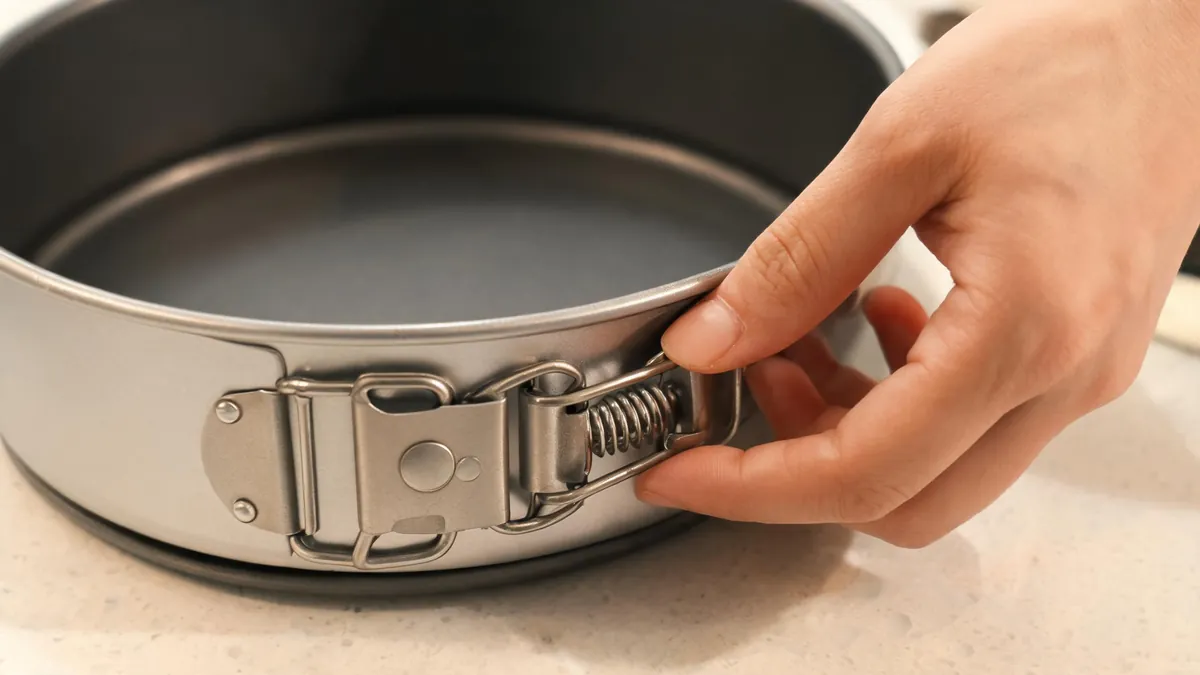
Springform pans are a separate engineering problem from the other two because of the mechanism. A springform is a band with a clamp, a base that fits inside, and sometimes a sealing detail where batter could escape. The quality of the latch decides whether the pan feels like a tool or a frustration.
Check four things on a springform sample. First, the latch: it should open and close smoothly with one hand, without pinching, and hold the band tight enough that the base does not move. Second, the base fit: some designs have a raised edge to catch leaks, others rely on the clamp pressure alone; for cheesecake batters, a leak-resistant base detail is worth specifying. Third, the base edge: a smooth edge that will not cut the cake when you slide a knife around it. Fourth, the whole pan’s behavior under thermal cycling — bands and bases can distort after repeated oven use, which shows up as leaks in month three rather than day one.
Because the mechanism is a moving part, springform pans also need a different QC check than fixed pans. The sample evaluation should include opening and closing the latch repeatedly, not just looking at the coating. If you are sourcing a private-label springform, ask the supplier how they test the mechanism and what their defect allowance is for latch failures.
Sizes, Sets and Retail Presentation
Retail bakeware is sold both as individual pans and as sets, and the set configuration changes the packaging and the price point. A two-piece cake set (two same-size rounds for layer cakes) is a standard retail package; a three-piece set with different sizes serves a different shopper. Loaf pans are usually singles. Springform pans are usually singles or a two-size set.
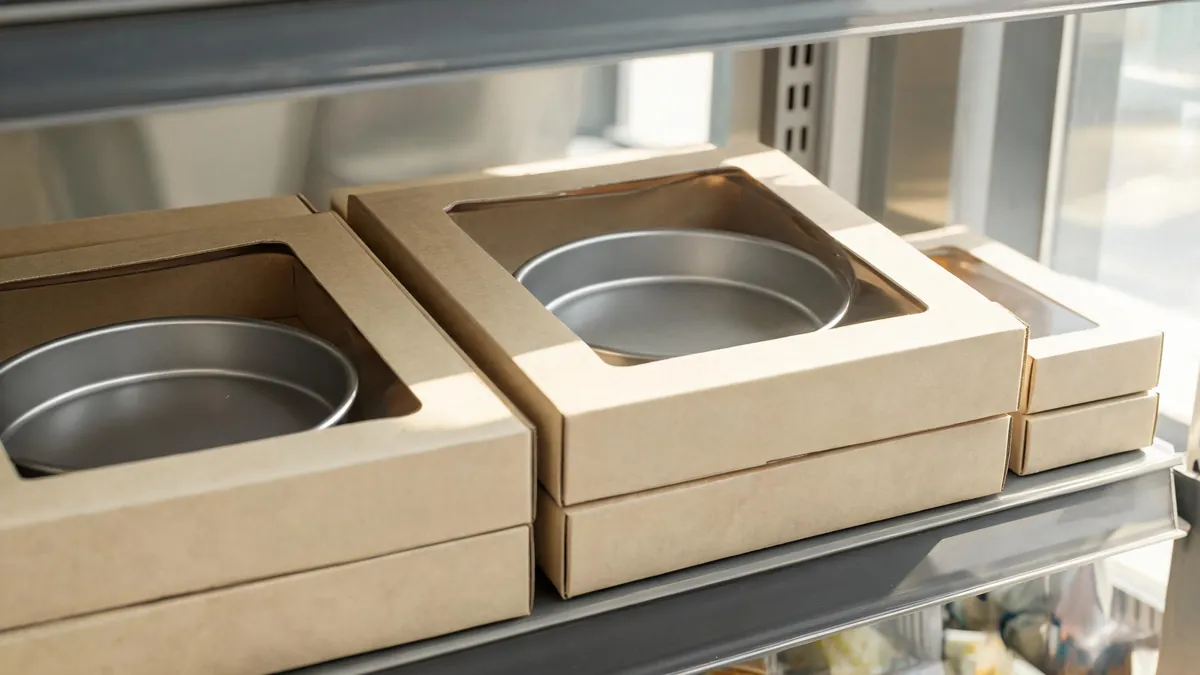
Decide the set strategy before sampling, because it changes the packaging spec, the carton count and the MOQ. Retail packaging for these pans is usually a box or a sleeve with a window, so the shopper can see the coating and the shape. The packaging must also carry the size clearly — bakers buy by size, and a loaf pan sold without a visible dimension is a returned product waiting to happen. Our guide to export cartons and retail pack counts for baking trays covers the packaging approval steps that apply to pan lines too.
For seasonal retail — Christmas cake pans, spring cheesecake sets — the ordering window runs months ahead of the shelf date. The holiday bakeware supplier guide explains how to structure seasonal mixes and reorder plans so you are not paying air freight for November pans ordered in October.
QC Checks to Put in Your Sample Approval
Pan lines fail in predictable places, and your sample approval should check each of them before bulk production, not after. Use this list when you approve the pre-production sample and again when you review the bulk QC report.
| Check | What to look for | Why it matters |
|---|---|---|
| Gauge and weight | Compare measured gauge and weight against the spec sheet | Gauge substitution changes heat behavior and durability |
| Flatness | Base sits flat on a level surface; no rocking | A rocking cake pan bakes unevenly and reads as cheap |
| Rim and edge finish | Rolled or smooth rims, no sharp edges, no coating skips | Sharp edges damage packaging and hands; rim wear is the first coating failure |
| Coating coverage | Inside, outside walls, rim and base all coated per spec | Partial coating leads to rust and returns |
| Springform mechanism | Latch cycles smoothly; base fits tight; no leak path | Mechanism defects appear only in use, so check before bulk |
| Dimension tolerance | Diameter and depth within agreed tolerance | Retail sizes must match the label the shopper trusts |
| Oven test | Bake a standard batter or heat-cycle the sample at rated temperature | Confirms coating release and warp behavior in real conditions |
Sample approval is where most pan quality is actually decided. The dimension, fit and finish checks in the kitchenware sample approval guide apply directly to cake, loaf and springform pans — measure everything on the sample and write the numbers into the approval record.
The Cost Structure of a Pan Line Quote
When a bakeware supplier quotes a cake, loaf or springform pan line, the unit price is built from recognizable components, and a buyer who asks for the breakdown gets a better negotiating position than one who only compares totals. The main cost blocks are the steel blank, the forming and tooling, the coating system, the packaging and the factory margin. Steel cost moves with raw material prices and with gauge — heavier gauge costs more before any processing begins. Coating cost varies with the coating quality tier and the coverage you specify; full coverage on inside, outside and rim costs more than a single inside coat, and the difference shows up in your return rate, not on the quote.
Ask the supplier to separate the quote into line items rather than accepting one blended number: blank and material, forming, coating, handle and lid where relevant, packaging, and tooling amortization if the pan is a custom size. A line-item quote lets you see where the cost is concentrated and where a specification change — a thinner gauge, a simpler rim, a standard color — moves the price. It also makes it harder for a supplier to hide a tooling charge inside the unit price of a standard pan.
Two components deserve special attention in pan lines. Tooling amortization should be visible when a size is custom; if the supplier says the tooling is “included,” ask how much of the unit price it represents and what happens on reorders once the tooling is paid. Packaging is a bigger share of pan cost than many buyers expect, because pans are bulky relative to their value and retail boxes with windows are not cheap. A packaging change is often the fastest lever on a quote — and the fastest way to damage the product if it is done badly.
MOQ, Tooling and Reorder Pricing for Pan Lines
Standard sizes of cake, loaf and springform pans usually run on existing tooling, which keeps the MOQ lower than for custom shapes. If you need a custom size, a private-label emboss on the base, or a proprietary coating color, expect a tooling or setup cost and a higher minimum. Ask the supplier to separate standard-line pricing from custom-line pricing so you can see what the custom content actually costs.
Reorder pricing matters as much as the first-order price for a line you intend to carry continuously. Confirm how the supplier treats reorders: whether the price holds for a defined period, whether a larger reorder quantity earns a better tier, and whether the coating or the blank price can change with raw-material movements. The MOQ, pricing and production timeline guide walks through these questions with a China bakeware supplier in mind.
Quick answer: can one bakeware supplier produce cake, loaf and springform pans plus my muffin and tray lines?
Usually yes — these products share the same metal-forming and coating processes, and many bakeware factories run all of them on the same lines. Consolidating pan families with one supplier reduces coating variance, simplifies your compliance file and improves your carton and freight math. Verify the factory’s actual production lines for each pan type before you consolidate, because some suppliers buy in one category and produce another.
Private Label Options for Pan Lines
Most retail bakeware programs are private label: the pan is a standard factory product carrying your brand, or a lightly customized version of one. The customization options for cake, loaf and springform pans follow a clear ladder, and each step adds cost and minimums in a different way.
- Label and packaging only. The pan is standard; your brand appears on the box, sleeve or sticker. Lowest cost, lowest minimums, fastest path to market.
- Base emboss. Your brand or logo is pressed into the base of the pan. The emboss needs a marking tool on the forming line; cost is modest but it is a permanent feature that changes the pan’s look and your QC checks.
- Custom coating color. The coating is mixed to your color rather than the factory’s standard. Coating colors need minimum batch sizes and can complicate reorders if the factory changes coating vendors.
- Custom size or shape. A proprietary size or pan shape means new tooling, the largest cost step, and usually a meaningful MOQ tied to amortizing the mold.
- Set configuration. Bundling sizes or types into a branded set with custom packaging creates a proprietary retail item from standard pans, often the best value customization for cake programs.
Decide how much proprietary content your brand actually needs. A cake pan with a visible base emboss and a strong box can build a brand without a custom mold; the tooling step is where private-label economics change, because you own the mold and you carry the risk if the line stalls. Where custom tooling is justified, keep the mold ownership clause in the supply agreement clear — the bakeware tooling cost and ownership guide covers the structure.
Order Timeline and Seasonal Planning for Pan Lines
Pan lines follow a predictable timeline, and the calendar matters more for springform and seasonal sets than for everyday round pans. Plan the order in stages rather than expecting one quote to cover the whole process. The typical flow runs: briefing and quote, sample and approval, tooling or setup confirmation for custom items, bulk production, final inspection, then shipping. Each stage can take weeks, and a buyer who starts the process assuming only production time will miss every seasonal window.
| Stage | What happens | Buyer’s action |
|---|---|---|
| Briefing and quote | Supplier confirms sizes, gauge, coating, packaging | Send a written spec; ask for line-item pricing |
| Sample and approval | Pre-production sample of each pan type | Run the QC checks in this guide; approve in writing with measurements |
| Tooling and setup | Custom sizes and embosses are made ready | Confirm tooling cost, ownership and lead time |
| Bulk production | Pans are formed, coated and packed | Agree the inspection window and the shipment date |
| Final inspection | QC report and loading check | Attend or use a third party; check batch positions |
| Shipping | Ocean freight, customs and delivery | Add transit buffer before your retail sell-by date |
For holiday and seasonal lines — Christmas cake sets, spring cheesecake programs — work backwards from the shelf date and add buffer at every stage. Factories fill capacity before peaks, so the buyer who confirms the production slot early gets the date; the buyer who waits gets the excuse. The seasonal reorder guide for bakeware suppliers shows how to structure the timing across a full year.
Frequently Asked Questions
What material is best for retail cake and loaf pans?
Carbon steel and aluminized steel dominate home retail because they combine even heating with reasonable weight and cost. The gauge matters more than the material family name: thicker steel heats more evenly and warps less. Confirm the gauge and coating spec with your supplier for each pan size.
Are springform pans coated on the inside only?
Some budget lines are coated inside only and rely on the raw steel outside, which can rust. Specify full coating coverage — inside, outside walls, rim and base — and check it on the sample. Coating coverage is a spec you can negotiate, not a given.
What is a good MOQ for standard cake pan sizes?
MOQs vary by factory and by whether the size runs on existing tooling. Standard sizes on existing lines usually allow smaller minimums than custom shapes or private-label embossing. Ask the supplier to quote standard-line and custom-line MOQs separately before you compare.
Do springform pans need a leak-proof base for cheesecake?
Cheesecake batter is liquid enough to find small gaps, so a leak-resistant base detail is worth specifying if your shoppers bake cheesecake. Some designs add a raised edge on the base; others rely on clamp pressure. Confirm the design on the sample and test it with a batter bake.
How do I check coating quality on a pan sample without a lab?
Bake a standard batter in the sample at the rated oven temperature, then wash it per the care instructions and inspect for release, sticking and coating damage. Also check rim coverage and look for thin or skipped areas. For coating chemistry claims, ask the supplier for the coating vendor’s test report rather than testing it yourself.
If you are building a cake, loaf and springform pan line and want to brief suppliers with the right specs — sizes, gauge, coating coverage, springform mechanism checks and packaging — send us your target market and retail price points. We source bakeware programs daily and can help you compare factory quotes on the same basis. Request a bakeware line quote.